Direction Setting
Define the project vision, objectives, scope and exclusions in consultation with the Client, then formalise it all through a start-up meeting (and optional workshop).
Required Output
At the completion of this process, the following outputs will be produced or confirmed:
- Project vision
- Project objectives, targets, parameters and success criteria
- Project scope outline, including confirmation of scope exclusions
- Start-up meeting
- Start-up workshop (optional).
Purpose
The project vision, objectives, targets, parameters and success criteria will collectively form part of the Project Brief, and would also be included within the Project Management Plan (refer to the PMP process). A project can only be successful if it is fit for purpose, therefore it is important to clearly understand and define the Client’s objectives and requirements prior to Axios commencing work on the engagement.
A start-up meeting must be held prior to the vision, objectives, targets, parameters and success criteria being defined. In meeting with the Client in person, minutes must be produced. These minutes can prove to be an important reference in future as the project progresses into different phases.
A start-up workshop may also be required depending on a number of factors:
- The scale of the project
- The complexity of the project
- The number of personnel involved in the project team from the Client, project sponsor, key stakeholders, Axios and the design consultants.
Again, anything discussed in this workshop must be carefully documented so it can be referred to in future as these initial discussions can have a large impact on the direction of the project and the outcomes.
Client Approval
The Client must approve all outputs from this process, including at a minimum the following documents:
- Project Vision
- Project Objectives, Targets, Parameters and Success Criteria
- Project Scope outline
- Project Exclusions
- Start-up meeting minutes
- Start-up Workshop minutes (if held).
Approval will be deemed to have occurred if each item is issued to the Client with the invitation to comment and advising them that they will be incorporated into the Project Management Plan as approved unless comments are received advising otherwise. This avoids delays in the early stages of the project that may occur while waiting for a Client to provide explicit approval of the documents listed above.
Process Steps
- Project Vision
- Project Objectives, Targets, Parameters and Success Criteria
- Project Scope Outline
- Project Exclusions
- Start-up Meeting
- Start-up Workshop (Optional for small projects)
Project Vision
The project vision is to be developed in close consultation with the Client, and is a statement of the specific high-level aspirations of the project. A comprehensive review and understanding of the Client’s business plan must be undertaken at this stage.
Project Objectives, Targets, Parameters and Success Criteria
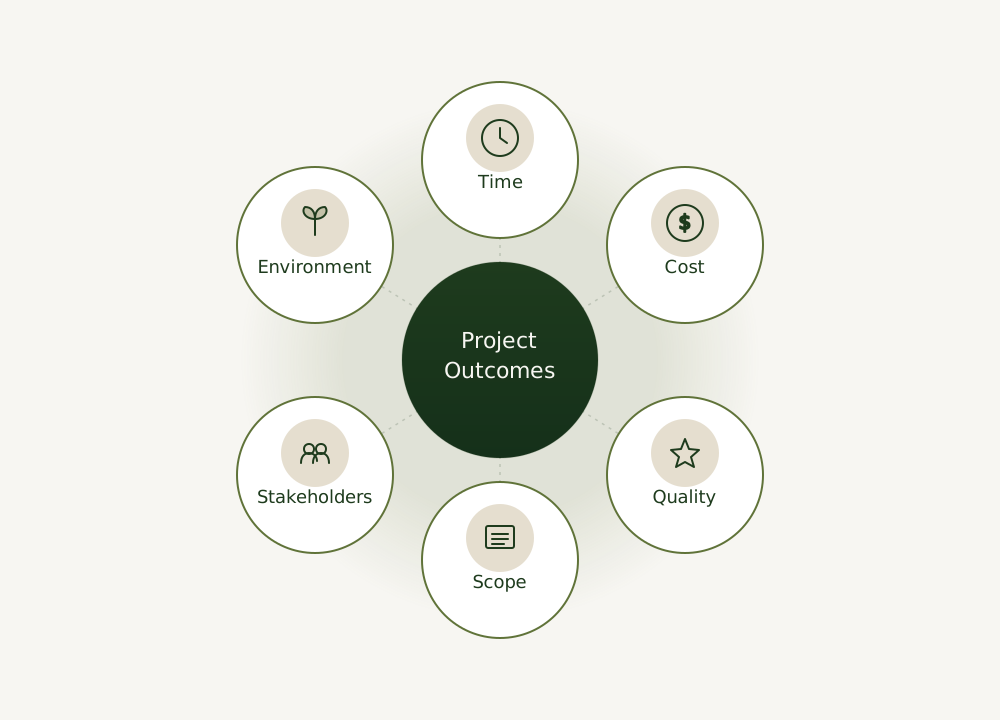
The project objectives, targets, parameters and success criteria provide the tangible goals for the project, direct the project team as to the Client’s requirements and will be the tools used to measure the performance of both Axios and the project team.
Project objectives and targets will often fall into the following categories. The job leader should consider each of the categories and that there may be several objectives and targets within one category.
Project Scope Outline
The Project Scope should be a succinct, summary statement that:
- Identifies the Client
- Identifies the project sponsor (if different from the Client)
- Identifies the key stakeholders
- Outlines the Client’s business needs
- Outlines the specific purpose of the project
- Outlines the key / critical project specifications (e.g. the GFA and number of storeys)
- Highlights the Project Budget
- Highlights all key milestones (e.g. planning approval, contract award, any necessary staging, and practical completion).
Project Exclusions
Highlighting project exclusions is an essential way of communicating to both the Client and the project team what is specifically not to be included in the design and delivery of the project. Note that the exclusions from the project scope and exclusions from the project budget are usually, but not always, the same. The Project Manager must be very careful and quite particular in identifying project exclusions and budget exclusions (an example is a Radiotherapy facility where the linear accelerators are included in the project but excluded from the Project Budget as they are funded from separate sources).
Project exclusions may include items such as:
- Land purchase
- Interfaces with existing buildings, and/or works within adjacent buildings
- Works to adjacent roads, such as signalisation
- External landscaping
- Specialist equipment or FF&E.
The exclusions will be unique to each project and will be determined through the scopes of services and discussions with the Client during the project start-up. This information will then form part of the project brief and provide direction to the consultant team as to what scope they need to be documenting. It is important that all parties are informed of any exclusion so that their expectations are aligned with what is required to be delivered.
Start-up Meeting
The start-up meeting must be arranged promptly following Axios engagement for a number of reasons. It provides a reference date for the start of Axios involvement in the project. It is also an important opportunity for the Client’s personnel and the Axios personnel involved in the project to meet as these people may differ from those involved during the proposal phase.
Consideration should be given to holding this meeting at Axios premises as it can set precedence for future meetings.
Agenda items for this meeting could include the following:
| Introductions |
|
|---|---|
| Key contacts |
|
| Project scope |
|
| Work undertaken to date |
|
| Consultant team engagement process |
|
| Project programme |
|
| Budget |
|
| Key Risks and issues |
|
| Confirm Axios engagement is complete |
|
Start-up Workshop (Optional for small projects)
The start-up workshop will be an extended form of the start-up meeting with particular attention paid to the project scope. In this longer format, there may be scope for brainstorming and the outcomes of this session must be documented and kept on record.
Attendees at the start-up workshop might include:
- The Client’s key representatives for the project
- The project sponsor’s key representatives for the project
- Key stakeholders, e.g. user group representatives
- Axios’s project team members
- Consultant representatives as may be engaged at that time, e.g. Cost Planner, Architect, etc.
References
- PMBOK Chapter 4 – Project Integration Management